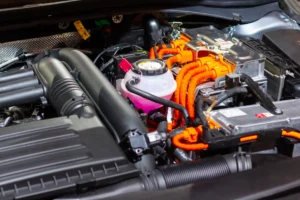
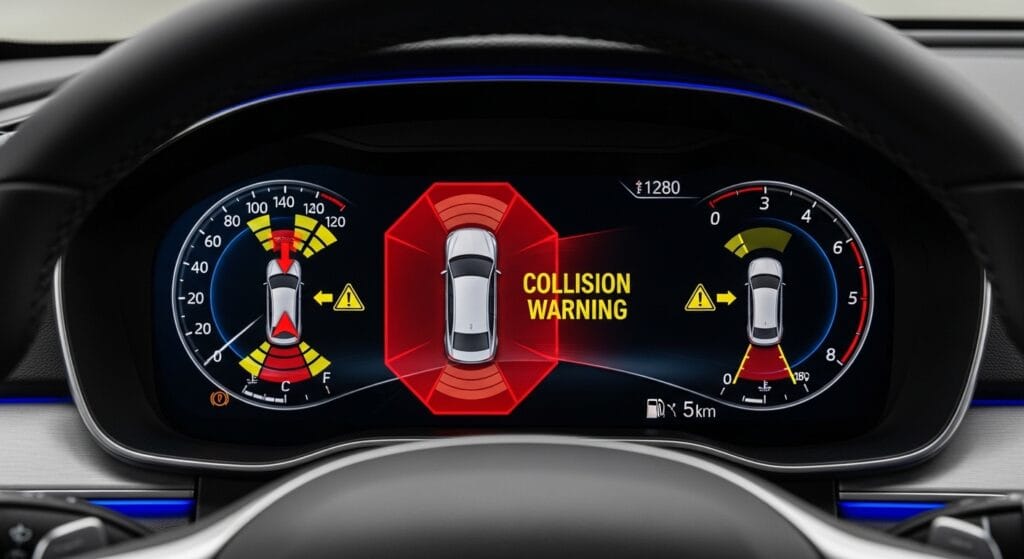
Artificial Intelligence (AI) is not just revolutionizing the way cars drive themselves, but also how they keep us safe. In the next decade, AI-powered safety systems will likely become as crucial as the airbags and seat belts we take for granted today. From collision avoidance to real-time hazard detection, AI is transforming the automotive industry by making driving safer for everyone on the road. Learn more about connected vehicle technology from the U.S. Department of Transportation.
As we move toward a future filled with smarter vehicles, AI technology is playing a central role in minimizing human error and providing valuable assistance. In this post, we’ll explore how AI enhances vehicle safety and why it’s quickly becoming an essential part of every new car.
What is AI in Vehicle Safety?
AI in vehicle safety refers to the use of artificial intelligence systems within vehicles to prevent accidents, reduce the risk of injury, and support drivers in critical decision-making moments. These systems are integrated with sensors, cameras, and radar to analyze and respond to the environment in real time. By processing vast amounts of data, AI can detect potential hazards that a driver may not notice and take action to mitigate or avoid them.
For example, AI in safety systems can automatically apply brakes, adjust steering, or sound alarms to warn the driver about imminent dangers. As AI systems become more advanced, they’re expected to handle increasingly complex safety tasks, moving closer to full autonomy. Learn more about the role of AI in automated vehicle systems from the NHTSA.
How AI Detects Hazards and Avoids Collisions
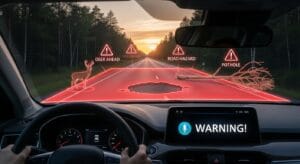 One of the key roles of AI in vehicle safety is its ability to predict potential hazards and take action to avoid collisions. AI-powered systems use a combination of sensors and cameras to monitor the environment around the car. This includes other vehicles, pedestrians, cyclists, road signs, and any obstacles that may pose a risk.
When a potential collision is detected, AI can calculate the best course of action in real time. The system may initiate emergency braking, steer the vehicle away from danger, or provide audible alerts to the driver. Such advanced systems are already available in many modern vehicles, such as the NHTSA’s guidelines for automated vehicles.
AI-Assisted Driving Features for Safe Lane Changing and Cruise Control
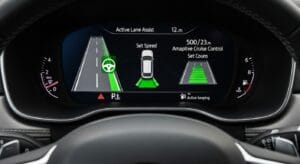
Another key benefit of AI in vehicle safety is its role in improving features like lane-keeping assist and adaptive cruise control. These features help maintain a safe distance between vehicles and prevent unintended lane departure. AI systems use cameras and sensors to detect lane markings and obstacles, allowing for precise steering adjustments.
Adaptive cruise control uses AI to adjust a car’s speed based on the distance to the car ahead. If the car detects a slower vehicle, it will reduce speed to maintain a safe following distance. If the road clears, it will accelerate back to the set speed. This combination of AI-assisted steering and adaptive cruise control makes highway driving significantly safer and more comfortable.
AI in Pedestrian and Cyclist Detection
AI systems in cars are becoming increasingly adept at identifying pedestrians and cyclists on the road. These systems use cameras and radar to detect movement and determine the size, speed, and direction of nearby individuals. When AI detects a person in the car’s path, it can send a warning to the driver or automatically apply the brakes to prevent a collision.
With pedestrian and cyclist accidents being a significant concern in urban areas, this feature has the potential to save lives. Research has shown that systems capable of detecting pedestrians and cyclists can reduce accidents significantly, especially in busy, fast-moving environments.
Real-Time Vehicle Monitoring and Diagnostics
 AI is also being used to monitor the health of the vehicle itself, preventing mechanical failures that could lead to accidents. These AI systems analyze the vehicle’s internal data, including engine performance, brake health, tire pressure, and fluid levels, and provide real-time alerts to the driver if something is wrong. Such predictive maintenance helps drivers stay ahead of potential issues, ensuring their vehicle is always roadworthy.
By sending notifications about the car’s condition, AI helps prevent breakdowns and accidents caused by mechanical failure. This allows for timely repairs and can save drivers from costly repairs down the line. As cars become increasingly integrated with cloud-based systems, this data is also shared with service centers, making repairs quicker and more efficient. For more on car maintenance, see our guide on Essential Car Maintenance Tips Every Driver Should Know.
The Role of AI in Driver Assistance and Autonomous Driving
The ultimate goal of AI in vehicle safety is to assist drivers and eventually lead to fully autonomous vehicles. While we aren’t quite there yet, current AI-driven features lay the groundwork for self-driving cars. Many modern vehicles already have semi-autonomous driving capabilities, such as Tesla’s Autopilot, which utilizes AI to handle driving tasks like steering, braking, and acceleration in certain conditions.
Self-driving cars are expected to revolutionize road safety by eliminating human error, which is the cause of 94% of all traffic accidents according to the National Highway Traffic Safety Administration (NHTSA). As AI continues to improve, we may see fully autonomous vehicles on the road, capable of driving without human intervention.
Ethical Considerations and AI in Vehicle Safety
As AI plays a larger role in vehicle safety, ethical considerations arise. One major question is how autonomous systems will make decisions in critical situations. For example, if a self-driving car has to choose between hitting an obstacle or swerving into traffic, how does the AI decide? These “moral dilemmas” are a key challenge for developers and policymakers to address as autonomous driving technology progresses.
Ensuring that AI systems make fair and transparent decisions will be crucial in gaining public trust. The implementation of clear guidelines and regulations will help mitigate these ethical concerns and make AI-driven cars safer and more reliable.
Conclusion: The Future of AI-Driven Vehicle Safety
AI is already transforming vehicle safety, and its influence will only continue to grow. From real-time hazard detection to autonomous driving, AI is making our roads safer, reducing accidents, and improving the driving experience. As this technology advances, we can expect even more innovative features to enhance vehicle safety and driver convenience.
While fully autonomous cars may still be a few years away, the current AI-driven systems already provide valuable assistance. Whether it’s preventing a collision, helping with lane changes, or maintaining a safe distance, AI is an integral part of the future of vehicle safety. For more information, check out our article on In-Car AI Copilots in 2026: What They Really Do and explore our guide on Essential Car Maintenance Tips Every Driver Should Know for insights into keeping your vehicle safe and running smoothly.