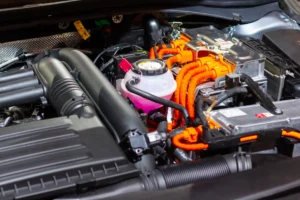
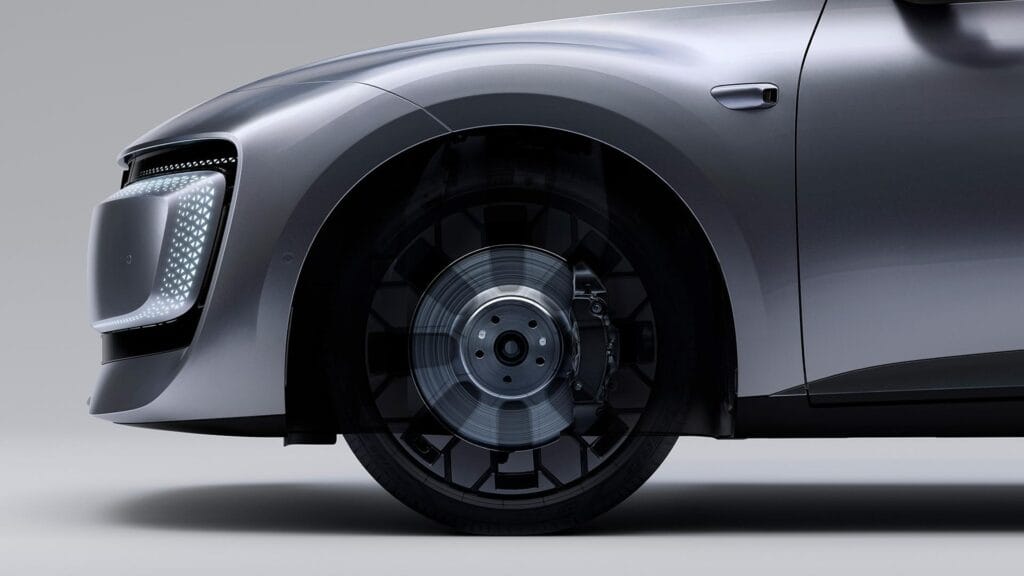
Braking technology has changed considerably since the days when drivers relied entirely on mechanical linkages and conventional hydraulic systems. Modern vehicles increasingly use electronic controls to coordinate braking pressure, stability systems, regenerative braking, and driver-assistance functions. One important development is brake-by-wire technology.
Brake-by-wire systems use electronic signals to interpret the driver’s braking request and control how braking force is applied. Depending on the design, the system may use an electronically controlled hydraulic actuator or electromechanical components to operate the brakes.
In 2026, electronic braking is especially relevant to electric vehicles, hybrids, and advanced driver-assistance systems. Understanding how it works can help drivers evaluate modern vehicle technology, recognize potential maintenance concerns, and better understand the safety features built into newer cars.
What Is a Brake-by-Wire System?
 A brake-by-wire system uses electronic control technology to manage at least part of the braking process. Rather than relying exclusively on a direct mechanical or hydraulic relationship between the brake pedal and wheel brakes, the system interprets braking demand through sensors and an electronic controller.
When the driver presses the brake pedal, sensors may measure pedal travel, force, or position. An electronic control unit processes that information and commands the braking system to produce the required deceleration.
Brake-by-wire does not necessarily mean that hydraulic fluid has been eliminated. Many modern systems still use hydraulic pressure to operate the brake calipers, but an electronically controlled actuator generates or regulates that pressure.
Fully electromechanical braking systems, which can use electrically operated wheel-brake actuators, represent another approach. These designs have different engineering and safety requirements.
How Brake-by-Wire Systems Work
Although designs differ among manufacturers, a typical electronic braking system includes a brake pedal sensor, electronic control unit, actuator, braking hardware, and monitoring systems.
1. The Driver Presses the Brake Pedal
When the driver presses the pedal, sensors measure the request for braking. Depending on the vehicle, the system may monitor pedal movement, applied force, or both.
Unlike a conventional hydraulic arrangement, pedal movement does not always directly determine hydraulic pressure at the wheels.
2. The Control Unit Calculates Braking Demand
The electronic controller interprets the driver’s input and determines how much braking is required. It may also consider information from wheel-speed sensors, vehicle stability systems, and other electronic components.
In hybrids and electric vehicles, the controller may coordinate friction brakes with regenerative braking to achieve the requested deceleration.
3. The Actuator Applies Braking Force
An electronically controlled actuator generates hydraulic pressure or, in certain architectures, commands electromechanical braking hardware.
The system applies braking force according to its programmed control strategy while monitoring the vehicle’s response.
4. Feedback Helps Maintain Control
Modern electronic braking systems monitor relevant operating conditions and can adjust their commands. This coordination supports features such as anti-lock braking, electronic stability control, and certain driver-assistance functions.
Manufacturers must design these systems to meet applicable braking performance and safety requirements. The National Highway Traffic Safety Administration oversees federal motor vehicle safety standards in the United States.
Brake-by-Wire vs. Traditional Hydraulic Brakes
Traditional hydraulic brakes use the driver’s pedal force, often assisted by a vacuum or electric brake booster, to create pressure in the braking system. That pressure travels through hydraulic lines and operates the wheel brakes.
Electronic brake-by-wire systems can separate the driver’s pedal input from the actual generation or distribution of braking pressure.
This distinction allows the vehicle to coordinate braking with other electronic functions more precisely, but it also introduces additional sensors, control software, and electrical components.
Pedal Feel
In a conventional hydraulic system, the driver’s pedal sensation is influenced by hydraulic pressure and mechanical components.
Some brake-by-wire systems use a pedal simulator or other mechanism to create a familiar resistance and travel sensation. Manufacturers tune these characteristics to provide predictable feedback.
Braking Coordination
Electronic control can help coordinate friction braking with regenerative braking and stability functions. This can be especially valuable in electrified vehicles, where several systems may contribute to slowing the car.
System Complexity
Brake-by-wire introduces additional electronic hardware and software. Diagnosis and repair may require specialized tools, manufacturer procedures, and technician training.
Why Electric Vehicles Use Electronic Braking
Electric vehicles can recover some energy during deceleration by operating their electric motors as generators. This process is known as regenerative braking.
However, regenerative braking cannot always provide the full amount of deceleration required. Its effectiveness can vary with battery charge level, temperature, vehicle speed, and system limits.
Electronic braking systems help coordinate regenerative and friction braking to deliver the requested deceleration.
Blended Braking
Blended braking combines regenerative braking with conventional friction braking. The vehicle’s controller determines how much braking each system should provide.
During gentle deceleration, regenerative braking may provide a substantial portion of the braking force. During harder stops, friction brakes may contribute more.
The goal is to deliver consistent braking behavior while recovering energy when practical.
Energy Efficiency
Regenerative braking can improve efficiency by recovering energy that would otherwise be dissipated as heat in the friction brakes.
That recovered electricity can be stored in the vehicle battery and used later for propulsion.
For more background on electrified vehicles, read our guide to the future of electric vehicles.
How Brake-by-Wire Supports Driver-Assistance Systems
Modern driver-assistance features often need the ability to request braking independently of direct pedal input.
Electronic braking controls can help support these functions by responding to commands from approved vehicle systems.
Automatic Emergency Braking
Automatic emergency braking systems may detect a potential collision and command braking when the driver has not responded adequately.
Depending on the vehicle, the system may reduce collision severity or help avoid certain crashes.
The NHTSA driver-assistance technology resources explain the purpose and limitations of automatic emergency braking and other crash-avoidance systems.
Adaptive Cruise Control
Adaptive cruise control can adjust vehicle speed to maintain a selected following distance. When slowing is required, the vehicle may command braking through its electronic control systems.
Electronic Stability Control
Electronic stability control can apply braking force to selected wheels when the vehicle begins to deviate from the driver’s intended path.
Brake-by-wire architectures can support close coordination between stability control and other braking functions, although conventional hydraulic systems can also provide electronic stability control.
Drivers interested in these features can explore our article on important modern car safety features.
What Are the Benefits of Brake-by-Wire?
Electronic braking offers several potential advantages, although the results depend on the specific vehicle and system design.
Precise Braking Control
Electronic controllers can calculate and regulate braking commands using multiple sources of vehicle information. This can support consistent coordination among braking, stability, and driver-assistance functions.
Integration With Regenerative Braking
In electrified vehicles, brake-by-wire can help manage the transition between energy recovery and friction braking.
Well-designed systems aim to make this transition smooth and predictable for the driver.
Flexible Vehicle Design
Separating pedal input from some braking hardware can give engineers greater flexibility in packaging and system architecture.
However, actual space and weight savings vary. Electronic braking does not automatically make a vehicle lighter or simpler.
Support for Automated Functions
Electronically controlled braking can be integrated with advanced driver-assistance and automated-driving functions that need controlled deceleration.
This integration is one reason electronic braking remains important as automotive software and sensing systems become more sophisticated.
What Happens if a Brake-by-Wire System Fails?
Because braking is a safety-critical function, manufacturers must account for potential faults in sensors, electrical components, actuators, and control software.
Brake-by-wire systems may use redundant sensors, backup power arrangements, fault monitoring, and alternative braking strategies. The exact safety architecture varies among designs.
Fault Detection
Electronic control systems can monitor operating conditions and detect certain abnormalities. If a problem is identified, the vehicle may display a warning and limit particular functions.
A brake warning should never be ignored simply because the vehicle appears to drive normally.
Backup Braking Arrangements
Some electrohydraulic systems include a hydraulic fallback path or another means of retaining braking capability if electronic assistance becomes unavailable.
Other architectures rely on different forms of redundancy. Drivers should not assume that every brake-by-wire vehicle has the same mechanical backup system.
What Drivers Should Do
If a serious braking warning appears or the brake pedal behaves abnormally, the driver should follow the owner’s manual and stop safely as soon as practical.
If braking performance is impaired, the vehicle should not be driven until the issue has been properly assessed.
The NHTSA recall lookup allows U.S. vehicle owners to check for open safety recalls using a vehicle identification number.
Are Brake-by-Wire Systems Safe?
 Brake-by-wire systems can be designed to meet stringent safety requirements, but safety depends on engineering quality, validation, maintenance, and correct operation.
Manufacturers must consider failures involving sensors, software, actuators, electrical supply, and communication between control units.
The automotive industry uses functional safety engineering practices to address these risks. The ISO 26262 functional safety standard provides a framework for managing safety-related risks in automotive electrical and electronic systems.
Electronic braking should not be viewed as inherently safer or less safe than conventional braking based only on the technology name. Actual performance depends on the complete vehicle design and its ability to operate safely under expected conditions.
Common Brake-by-Wire Maintenance Considerations
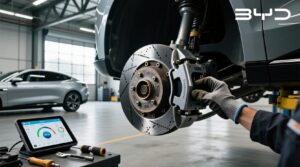
Electronic braking does not eliminate routine brake maintenance. Many brake-by-wire vehicles still use brake pads, rotors, calipers, hydraulic fluid, and other familiar components.
Brake Pads and Rotors
Friction brakes still experience wear, even when regenerative braking reduces their workload.
In some electric vehicles, reduced friction-brake use can contribute to surface corrosion or other maintenance concerns, especially in environments with moisture and road salt.
Brake Fluid
Vehicles with hydraulic braking components may still require brake fluid inspection or replacement according to the manufacturer’s maintenance schedule.
Owners should not assume that electronic controls remove the need for hydraulic system service.
Electronic Diagnostics
Technicians may need diagnostic equipment to evaluate brake sensors, control modules, actuators, and stored fault codes.
Some maintenance procedures require electronically controlled components to be placed into a service mode before work begins.
For general vehicle upkeep, see our article on essential car maintenance tips.
Why Brake Repairs May Become More Specialized
As braking systems become more electronically integrated, repair procedures may become increasingly vehicle-specific.
Replacing a component may require electronic initialization, calibration, software configuration, or diagnostic testing.
Incorrect procedures could affect braking performance, which is why owners should use technicians who understand the manufacturer’s service requirements.
Repair shops may also need additional training and diagnostic equipment to work safely on high-voltage electric vehicles.
The SAE International automotive engineering community develops technical resources and standards relevant to modern vehicle systems, including electrification and safety technologies.
Brake-by-Wire and Vehicle Software Updates
Modern braking systems depend on software that interprets sensor signals and coordinates electronic components.
Some vehicles may receive manufacturer-approved software improvements affecting braking-related functions, although the availability and delivery method depend on the vehicle.
Safety-critical updates require careful testing because braking behavior must remain predictable.
This is part of the broader shift toward software-defined vehicles. Our guide to over-the-air vehicle updates explains how manufacturers increasingly use software to maintain and improve modern cars.
Will Brake-by-Wire Replace Traditional Brakes?
Electronic braking is likely to remain an important part of vehicle development, particularly in electric vehicles and advanced automated-driving platforms.
However, the transition will not necessarily happen in a single step.
Many vehicles already use electronically controlled hydraulic braking. More extensive electromechanical systems may become increasingly practical as manufacturers improve actuators, redundancy, and control architectures.
Conventional braking systems will also remain in use across many vehicle models.
The future will likely include several braking architectures rather than one universal design.
What Drivers Should Know Before Buying a Car
Drivers comparing vehicles should focus on braking performance, pedal feel, reliability, maintenance requirements, and available safety features rather than treating brake-by-wire as a standalone selling point.
During a test drive, pay attention to whether braking feels predictable during gentle stops, harder deceleration, and low-speed maneuvers.
For hybrid and electric vehicles, notice how smoothly the system transitions between regenerative and friction braking.
Buyers should also review warranty coverage, manufacturer maintenance recommendations, and any available recall information.
A vehicle’s braking system is one of its most important safety features, so clear documentation and qualified service support are essential.
The Future of Electronic Braking Technology
Automotive engineers continue developing electronic braking systems that offer precise control, improved integration, and flexible vehicle architectures.
Future developments may include more advanced electromechanical actuators, improved fault monitoring, and closer coordination with automated-driving systems.
Electric vehicles may also benefit from increasingly sophisticated regenerative braking management, helping manufacturers balance energy recovery with consistent stopping performance.
As these systems evolve, reliability, redundancy, and safety validation will remain central engineering priorities.
Final Thoughts
Brake-by-wire technology is changing how modern vehicles interpret and respond to braking requests. By combining electronic sensors, controllers, and actuators, these systems can coordinate braking with regenerative energy recovery, stability control, and advanced driver-assistance features.
However, electronic braking does not eliminate traditional maintenance needs or guarantee identical performance across vehicles. Different manufacturers use different architectures, and backup strategies vary.
For drivers, the most important considerations remain predictable braking behavior, proper maintenance, attention to warning messages, and qualified repairs. As electronic vehicle technology continues to develop in 2026 and beyond, brake-by-wire systems will remain an important part of the engineering behind modern vehicle safety.