For more than a century, drivers have controlled their vehicles through a steering wheel connected mechanically to the front wheels. Even as power steering evolved from hydraulic assistance to electric motors, the basic connection between the driver’s hands and the steering mechanism remained familiar. Steer-by-wire technology is changing that relationship.
In 2026, steer-by-wire is becoming an important development in automotive engineering. Instead of relying on a continuous mechanical steering connection, a true steer-by-wire system uses sensors, electronic controllers, and actuators to translate driver input into wheel movement.
This technology offers new possibilities for vehicle handling, interior design, and integration with advanced driver-assistance systems. However, it also raises important questions about reliability, steering feedback, maintenance, and what happens if electronic components fail.
Understanding how steer-by-wire works can help drivers make informed decisions as more automakers introduce electronically controlled steering systems.
What Is Steer-by-Wire Technology?
Steer-by-wire is a steering architecture in which electronic signals communicate the driver’s steering commands to actuators that control the direction of the road wheels.
In a traditional steering system, turning the steering wheel moves a mechanical steering shaft connected to a steering rack or similar mechanism. Electric power steering may provide assistance, but a physical connection remains.
A true steer-by-wire system removes that continuous mechanical connection during normal operation. Sensors measure the driver’s steering input, while electronic controllers calculate the required wheel angle and command an actuator to move the steering mechanism.
This distinction matters because electric power steering and steer-by-wire are not the same technology. A vehicle can have electrically assisted steering without using a fully electronic steering architecture.
Steer-by-wire belongs to a broader group of automotive technologies sometimes described as x-by-wire systems. These replace or supplement traditional mechanical control paths with electronic communication and actuation.
How Steer-by-Wire Technology Works
Steer-by-wire systems depend on several coordinated components. Although individual designs vary, the basic process involves detecting driver input, processing electronic signals, moving the road wheels, and generating steering feedback.
Steering Input Sensors
When the driver turns the steering wheel or yoke, sensors measure information such as steering angle, movement, and applied torque.
These measurements represent the driver’s intended steering command. The system transmits the information to an electronic controller rather than relying on a direct mechanical shaft to move the front wheels.
Electronic Steering Control Unit
The controller interprets the driver’s input and determines the appropriate steering response.
Depending on the system, calculations may consider vehicle speed, steering angle, operating conditions, and other available information.
At low speeds, the system may allow a relatively small steering-wheel movement to produce a larger road-wheel angle. At higher speeds, the steering response can become less aggressive to support precise control.
Steering Actuator
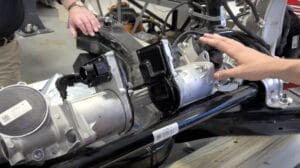
An electric actuator moves the steering rack or another mechanism that changes the direction of the road wheels.
The actuator must respond accurately to electronic commands while monitoring its actual position.
Feedback sensors help the controller determine whether the requested steering movement has occurred.
Artificial Steering Feedback
 Traditional steering systems transmit some road forces through the mechanical steering components. Removing the mechanical connection changes how drivers experience those forces.
Steer-by-wire systems can use an electric feedback motor to create resistance and steering sensations at the wheel or yoke.
Engineers can tune this feedback to provide a consistent steering feel while filtering out certain unwanted vibrations.
The SAE International automotive engineering community publishes technical research and resources related to electronic vehicle control, steering systems, and functional safety.
Steer-by-Wire vs. Traditional Power Steering
The main difference between steer-by-wire and conventional power steering is how the driver’s input reaches the road wheels.
Hydraulic power steering uses pressurized fluid to reduce the effort needed to turn the steering wheel. Electric power steering uses an electric motor to provide assistance, generally while retaining a mechanical connection.
Steer-by-wire uses electronic commands to control steering actuators without a continuous mechanical connection during normal operation.
Steering Response
Conventional steering geometry usually establishes a fixed relationship between steering-wheel movement and road-wheel angle, although some vehicles use variable-ratio mechanisms.
Steer-by-wire can adjust this relationship electronically. This flexibility may improve maneuverability at low speeds while providing more gradual steering responses at highway speeds.
Road Feedback
Traditional steering transmits some mechanical feedback from the tires and road surface. Electronic power steering can modify this sensation through its assistance characteristics.
Steer-by-wire creates steering feedback through a separate electronic mechanism, giving engineers additional control over the driver’s experience.
Mechanical Packaging
Removing the conventional steering shaft can provide greater flexibility in designing the dashboard, steering controls, and surrounding vehicle structure.
However, steer-by-wire also introduces electronic controllers, actuators, wiring, and redundancy requirements. It does not automatically make every vehicle lighter or mechanically simpler.
Why Automakers Are Developing Steer-by-Wire
Automakers are exploring steer-by-wire because it offers design flexibility and greater control over steering behavior.
Modern vehicles increasingly coordinate steering with electronic stability control, lane assistance, parking functions, and other driver-assistance systems.
Electronic steering architectures can support this integration while allowing manufacturers to customize steering characteristics for different driving conditions.
The technology also fits the development of software-defined vehicles, where electronic control systems play a growing role in vehicle performance and functionality.
Our article on in-car AI copilots in 2026 explores another way digital technology is transforming the relationship between drivers and modern vehicles.
Benefits of Steer-by-Wire Systems
Steer-by-wire offers several potential advantages, although the actual benefits depend on how the manufacturer designs and calibrates the system.
Variable Steering Ratios
One major advantage is the ability to change steering sensitivity electronically.
During parking, a relatively small steering input may produce a larger wheel angle. This can reduce the amount of steering-wheel rotation needed for tight maneuvers.
At highway speeds, the system can use a different relationship between steering input and wheel movement to support smoother control.
Customizable Steering Feel
Electronic feedback allows manufacturers to adjust steering resistance and response.
Some systems may offer different characteristics depending on the selected driving mode.
For example, a comfort-oriented setting could provide lighter steering effort, while a sport-oriented setting could use firmer feedback.
These characteristics are software-controlled and must be carefully calibrated to maintain predictable handling.
Reduced Unwanted Vibrations
Because the steering control is mechanically separated from the road-wheel actuator, engineers can filter certain vibrations that would otherwise travel through the steering mechanism.
This may improve comfort on uneven roads, although drivers still need useful information about vehicle behavior.
Interior Design Flexibility
Removing a conventional steering shaft can create opportunities for alternative cockpit layouts.
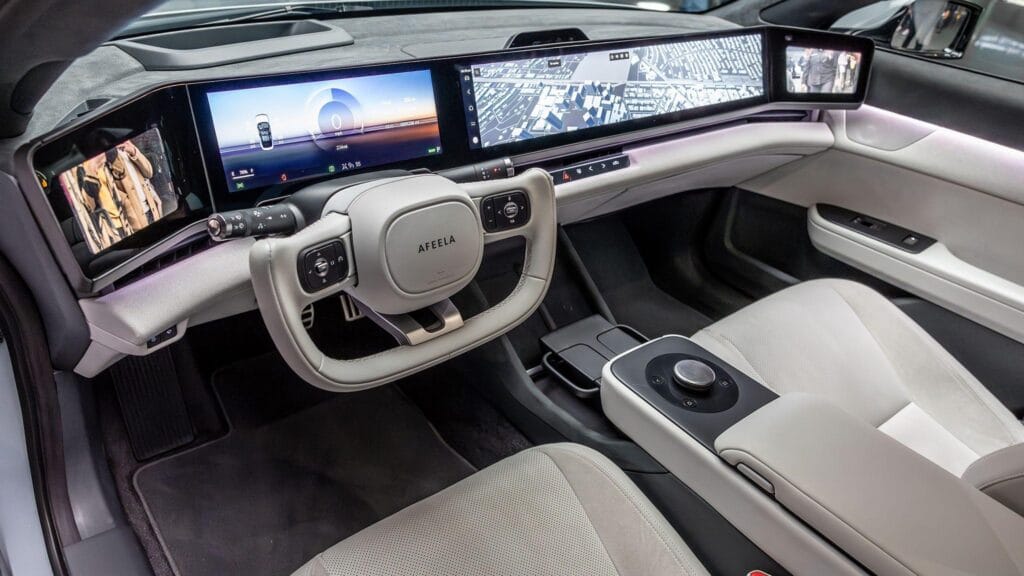
Manufacturers may use compact steering yokes, repositioned controls, or other interior configurations.
However, a yoke is not required for steer-by-wire. A vehicle can use a conventional round steering wheel with a fully electronic steering system.
Are Steer-by-Wire Systems Safe?
Safety is one of the most important considerations because steering is essential to controlling a moving vehicle.
A conventional steering system provides a mechanical connection that can remain available under certain electrical failures. A fully electronic steering architecture must address the loss of sensors, controllers, actuators, communication pathways, and electrical power through its safety design.
Manufacturers may use redundant electronic components, independent monitoring systems, backup electrical supplies, and fault-tolerant control strategies.
However, redundancy arrangements vary. Drivers should not assume that every steer-by-wire system has identical backup capabilities.
Redundant Sensors
Safety-critical steering systems may use multiple sensors to monitor driver input and actuator position.
If measurements disagree, the system can detect a potential fault and respond according to its safety strategy.
Backup Electrical Systems
Some designs incorporate redundant power supplies or other arrangements intended to maintain steering capability after certain electrical failures.
The effectiveness of these measures depends on the specific architecture and the failures it was designed to handle.
Continuous System Monitoring
Electronic controllers can monitor steering performance and detect certain abnormal operating conditions.
If a problem occurs, the vehicle may display warnings, restrict functions, or enter a designated fallback mode.
The ISO 26262 functional safety standard provides an engineering framework for addressing risks associated with automotive electrical and electronic systems.
What Happens if Steer-by-Wire Fails?
The answer depends on the vehicle’s design and the type of failure.
A properly engineered system must consider faults that could affect steering input, electronic communication, actuator operation, or power delivery.
Some systems use redundant components to maintain control after specified failures. Others may provide different fallback arrangements.
Drivers should never assume that a vehicle will continue steering normally after every possible electronic malfunction.
If a serious steering warning appears, the driver should follow the manufacturer’s instructions and stop safely as soon as conditions permit.
A vehicle showing abnormal steering behavior should be inspected before further driving.
U.S. owners can also check the NHTSA vehicle recall database for open safety recalls affecting their vehicles.
Which Vehicles Use Steer-by-Wire Technology?
Steer-by-wire has moved beyond experimental prototypes into selected production vehicles.
Tesla Cybertruck
The Tesla Cybertruck uses a steer-by-wire architecture with variable steering response. Its electronic steering system is designed to reduce the amount of steering-wheel movement required during certain maneuvers.
The vehicle also uses rear-wheel steering, which can contribute to maneuverability and handling.
Rear-wheel steering and steer-by-wire are separate technologies, however. A vehicle can have rear-wheel steering without eliminating the mechanical connection between its steering wheel and front wheels.
Lexus RZ
Lexus has developed a steer-by-wire system for the RZ electric crossover, paired with a compact steering control on supported configurations.
The system is intended to provide variable steering response and a different relationship between driver input and road-wheel movement.
Availability depends on model year, market, and equipment specification.
Drivers should verify the exact steering architecture before purchasing a particular vehicle, since similar-looking steering controls do not necessarily indicate the same underlying technology.
Steer-by-Wire and Advanced Driver Assistance
Electronic steering can work alongside driver-assistance features that require controlled steering inputs.
For example, lane-centering assistance may request steering adjustments to help maintain the vehicle’s position within a lane.
However, steer-by-wire is not required for lane-centering systems. Many vehicles use conventional electric power steering to provide similar assistance.
Likewise, installing steer-by-wire does not make a vehicle autonomous.
The National Highway Traffic Safety Administration’s driver-assistance resources explain the purpose and limitations of technologies that help drivers with steering, braking, and other tasks.
Our guide to important car safety features provides additional information about modern assistance systems.
How Steer-by-Wire Connects With Automotive Sensors
Electronic steering systems rely on accurate information about the driver’s commands and the vehicle’s response.
Steering angle sensors, torque sensors, wheel-position measurements, and other electronic inputs help the controller determine how to operate the steering actuator.
When integrated with driver-assistance functions, steering systems may also receive commands influenced by cameras, radar, and other vehicle sensors.
These technologies must work together reliably. A sensor detecting a lane boundary, for example, does not independently determine steering movement. Vehicle software must interpret the information and decide whether an assistance function should request an adjustment.
This relationship illustrates how modern automotive systems increasingly depend on coordinated electronics rather than isolated mechanical components.
Maintenance and Repair Considerations
Steer-by-wire systems can require specialized diagnostic procedures because they include safety-critical electronic components.
Technicians may need manufacturer-approved tools to inspect sensors, actuators, electrical connections, control modules, and stored diagnostic codes.
Steering Calibration
Certain repairs may require calibration or initialization to ensure the steering system correctly interprets driver input and wheel position.
Incorrect calibration could affect steering response, making proper service procedures essential.
Electrical and Software Diagnostics
Faults involving communication networks, control units, or power supplies may require electronic testing rather than conventional mechanical inspection alone.
Owners should use technicians familiar with the vehicle’s steering architecture.
Routine Mechanical Maintenance
Steer-by-wire does not eliminate tires, suspension components, steering linkages at the wheels, or other mechanical parts that require inspection.
Wheel alignment, tire condition, and suspension wear can still influence handling.
Our article on essential car maintenance tips explains why regular inspections remain important even in technologically advanced vehicles.
Can Software Updates Change Steering Feel?
 Because steer-by-wire uses electronic control, certain steering characteristics can be defined through software.
Depending on the vehicle and manufacturer, approved software updates may adjust aspects of steering response, feedback, or system behavior.
However, steering is a safety-critical function. Any software change affecting vehicle control requires careful engineering and validation.
Drivers should install only manufacturer-approved updates and follow any instructions provided with them.
For a broader discussion of vehicle software, see our guide to over-the-air vehicle updates.
Challenges Facing Steer-by-Wire Adoption
Despite its advantages, steer-by-wire faces several challenges before it becomes common across all vehicle segments.
System Cost
Redundant electronics, specialized actuators, sensors, and safety validation can increase development and manufacturing costs.
Manufacturers must determine whether the benefits justify these expenses for particular vehicles.
Driver Acceptance
Drivers accustomed to conventional steering may need time to adjust to variable steering ratios and electronically generated feedback.
Some may appreciate the reduced steering effort, while others may prefer the familiar feel of traditional systems.
Long-Term Reliability
Electronic steering systems must operate reliably over years of exposure to vibration, temperature changes, moisture, and everyday driving conditions.
Long-term durability and repair support will influence consumer confidence.
Regulatory Requirements
Manufacturers must ensure their steering systems comply with applicable vehicle safety regulations in the markets where they are sold.
These requirements can influence design choices, redundancy strategies, and implementation timelines.
What Drivers Should Know Before Buying a Steer-by-Wire Car
Drivers considering a vehicle with steer-by-wire should evaluate how the system feels during normal driving rather than focusing only on its technical description.
A test drive can help determine whether the steering response feels natural during parking, city driving, and highway maneuvers.
Buyers should also review the manufacturer’s safety documentation, warranty terms, maintenance requirements, and available service support.
It is useful to understand what warning messages may appear if the steering system detects a problem and what actions the manufacturer recommends.
Finally, remember that advanced steering technology does not replace the importance of tires, suspension condition, proper maintenance, and attentive driving.
The Future of Steer-by-Wire Technology
Steer-by-wire is likely to remain an important area of automotive development as manufacturers explore more flexible vehicle architectures.
Future systems may offer improved steering feedback, refined variable ratios, and closer integration with advanced assistance functions.
Manufacturers may also use electronic steering to support new cockpit designs and alternative steering controls.
However, widespread adoption will depend on cost, reliability, regulatory compliance, serviceability, and driver acceptance.
The technology is promising, but its success will ultimately depend on delivering predictable steering behavior and dependable safety performance.
Final Thoughts
Steer-by-wire technology represents a significant change in automotive steering design. By replacing the continuous mechanical steering connection with electronic sensors, controllers, and actuators, manufacturers can create more flexible steering responses and explore new vehicle layouts.
Its potential benefits include variable steering ratios, customizable feedback, and closer integration with modern electronic vehicle systems.
At the same time, steer-by-wire introduces safety-critical electronic components that require robust redundancy, careful software validation, and specialized maintenance.
For drivers, the most important considerations are predictable handling, proven reliability, proper service support, and a clear understanding of the vehicle’s capabilities. As the technology develops beyond 2026, steer-by-wire could become an increasingly familiar feature in modern vehicles.