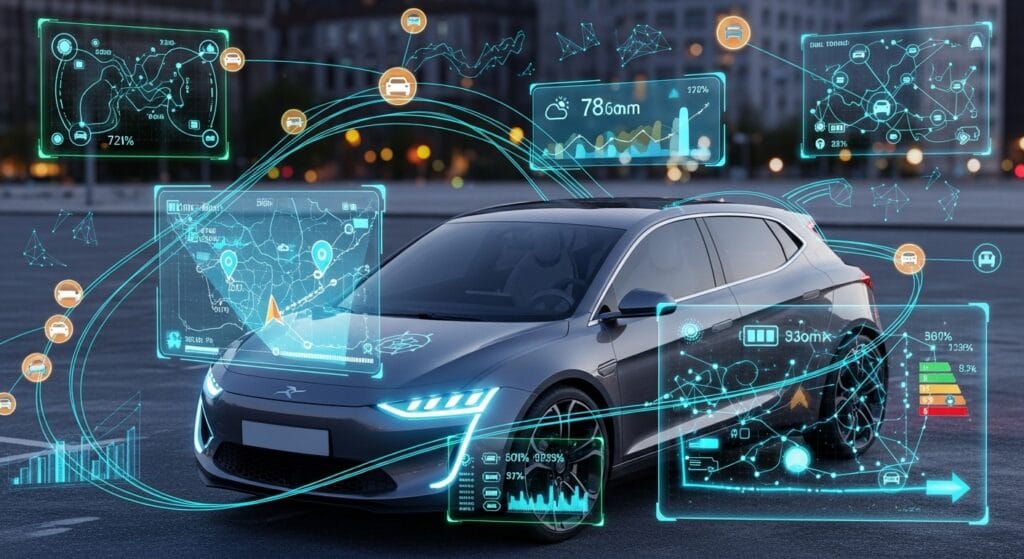
Connected cars in 2026 are changing the way drivers interact with roads, traffic, devices, and vehicle systems. These smart vehicles use internet access, sensors, software, and real-time data to make driving more convenient, informed, and responsive. The U.S. Department of Transportation explains that connected vehicle technologies use V2X communication to support safety, mobility, and system efficiency, making this one of the most important developments in modern driving. Learn more from the U.S. DOT.
For drivers who want to understand the bigger smart-car trend, our guide on In-Car AI Copilots in 2026 explains how AI tools are already changing everyday driving.
What Are Connected Cars?
Connected cars are vehicles equipped with communication systems that allow them to send and receive data. This connection may happen through cellular networks, Wi-Fi, Bluetooth, satellite systems, or built-in vehicle software. The goal is to make the vehicle more aware, more useful, and easier to manage.
How Connected Cars Use Real-Time Data
Real-time data is one of the main reasons connected cars feel smarter than older vehicles. A connected car can collect information from GPS, cameras, radar, mobile networks, and driver inputs. That information may then be used to adjust navigation, detect issues, or improve comfort features.
For example, a connected car may warn a driver about heavy traffic before they reach it. It may also suggest a nearby charging station, identify low tire pressure, or alert the owner when scheduled maintenance is due. Drivers can pair these alerts with basic upkeep habits from Essential Car Maintenance Tips Every Driver Should Know.
How Connected Cars Improve Navigation and Traffic Awareness
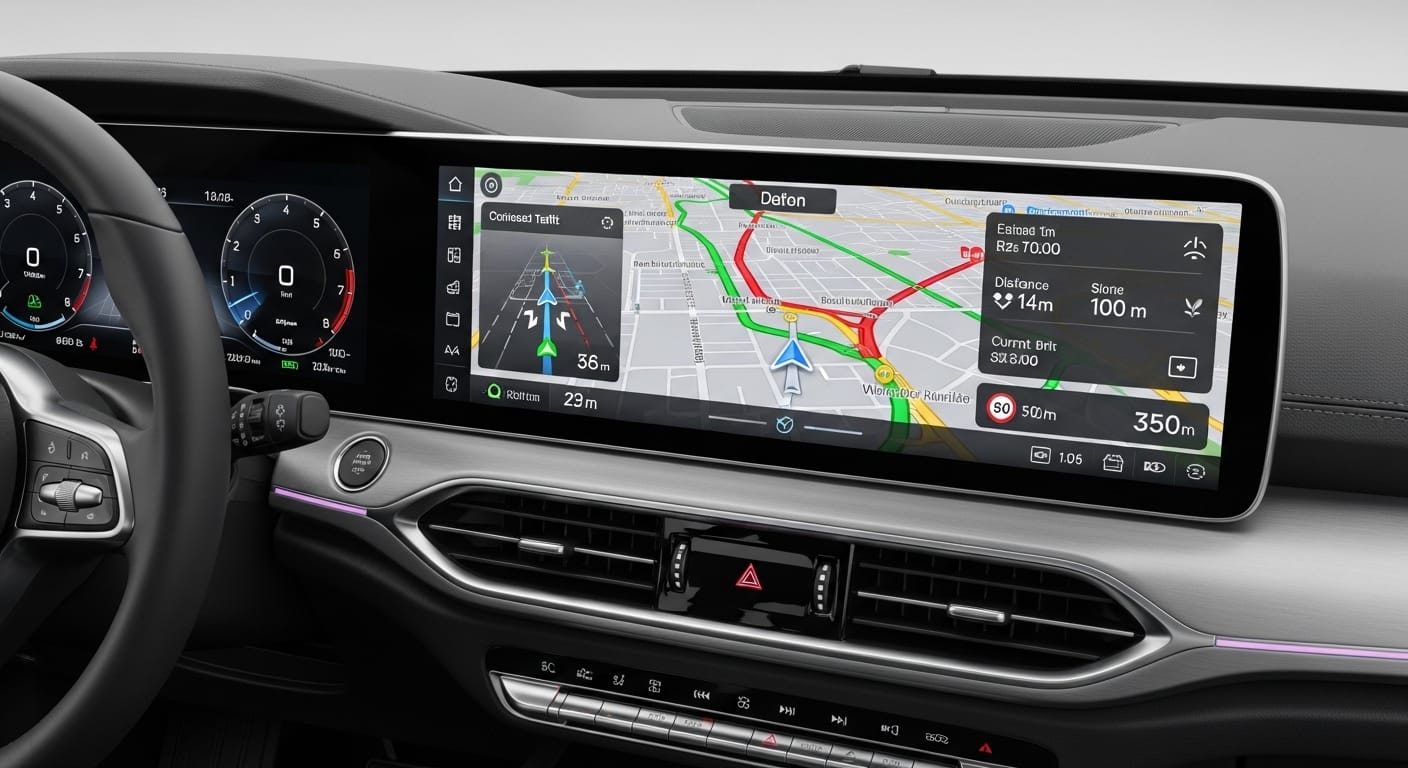
Navigation is one of the most practical benefits of connected car technology. Older navigation systems often relied on stored maps that became outdated. Modern connected systems can use live traffic updates, road closure alerts, weather information, and route changes.
The National Transportation Safety Board describes connected-vehicle technology as communication between vehicles, infrastructure, and other road users. This matters because connected systems may help drivers respond earlier to hazards, congestion, or changing road conditions. Read the NTSB’s overview of V2X technology.
Vehicle-to-Vehicle Communication and Safety Benefits
Vehicle-to-vehicle communication, often called V2V, allows cars to exchange information with nearby vehicles. This may include speed, location, direction, braking activity, and road hazard alerts. The goal is to help vehicles become more aware of what is happening around them.
If one connected car detects sudden braking ahead, nearby vehicles may receive an alert. This can give drivers more time to react. V2V communication may also help with blind spot warnings, intersection alerts, and traffic flow improvements.
Vehicle-to-Infrastructure Communication
Vehicle-to-infrastructure communication, also known as V2I, allows cars to communicate with road systems. This may include traffic lights, signs, toll systems, parking areas, and smart city technology.
The Federal Communications Commission has adopted rules for C-V2X auto safety spectrum, which supports communication between vehicles and surrounding systems. This shows how connected vehicle technology depends not only on cars, but also on communication networks and public infrastructure. See the FCC announcement on C-V2X rules.
Over-the-Air Updates and Smarter Vehicle Software
One major advantage of connected cars is the ability to receive over-the-air updates. Instead of visiting a dealership for every software improvement, some vehicles can receive updates through wireless connections.
These updates may improve infotainment features, navigation accuracy, battery management, driver assistance systems, or general software performance. In some cases, automakers may also use updates to fix bugs or improve system reliability.
Connected Cars and Vehicle Maintenance
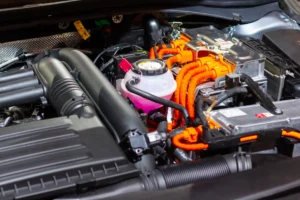
Connected technology can also make maintenance easier. Many smart vehicles can monitor important systems and notify drivers when something needs attention. This may include oil life, tire pressure, brake wear, battery condition, engine alerts, and service schedules.
Instead of waiting for a dashboard light or a noticeable problem, drivers can receive earlier warnings. Some systems can even send diagnostic information to a service center before the appointment.
Connected Cars and In-Car AI
Connected cars are closely tied to artificial intelligence. AI can help voice assistants understand commands, navigation systems learn driver habits, and safety systems recognize potential risks. When combined with connectivity, AI can make the vehicle feel more personalized and responsive.
For additional automotive insights outside this site, Autobest covers a range of car topics, including vehicle technology, reviews, and automotive trends.
Privacy Concerns With Connected Vehicles
Connected cars depend on data, which means privacy is an important concern. These vehicles may collect location history, driving behavior, phone contacts, app activity, system preferences, and vehicle usage details. Drivers should know what information is being collected and how it may be used.
Before using connected services, vehicle owners should review privacy settings. Many systems allow drivers to adjust data sharing, app permissions, location access, and cloud syncing.
Cybersecurity and Connected Cars
As cars become more connected, cybersecurity becomes more important. Any system that connects to networks needs protection from unauthorized access. The National Highway Traffic Safety Administration notes that vehicle cybersecurity requires a layered approach because both wireless and wired entry points may be vulnerable. Review NHTSA’s vehicle cybersecurity guidance.
Vehicle owners should install official updates, use strong account passwords, avoid unknown third-party devices, and be careful when connecting phones or apps. They should also rely on official manufacturer apps when managing vehicle features remotely.
Benefits for Electric Vehicles
Electric vehicles benefit greatly from connected systems. A connected EV can show battery range, charging status, nearby charging stations, energy use, and route planning based on available charge. These features can reduce range anxiety and make EV ownership easier.
What Drivers Should Look for in a Connected Car
Drivers shopping for a connected car should look beyond flashy screens. A good connected vehicle should offer useful features, clear privacy controls, reliable updates, and simple controls. The best technology is helpful without becoming distracting.
Useful Features to Consider
- Live traffic and route updates
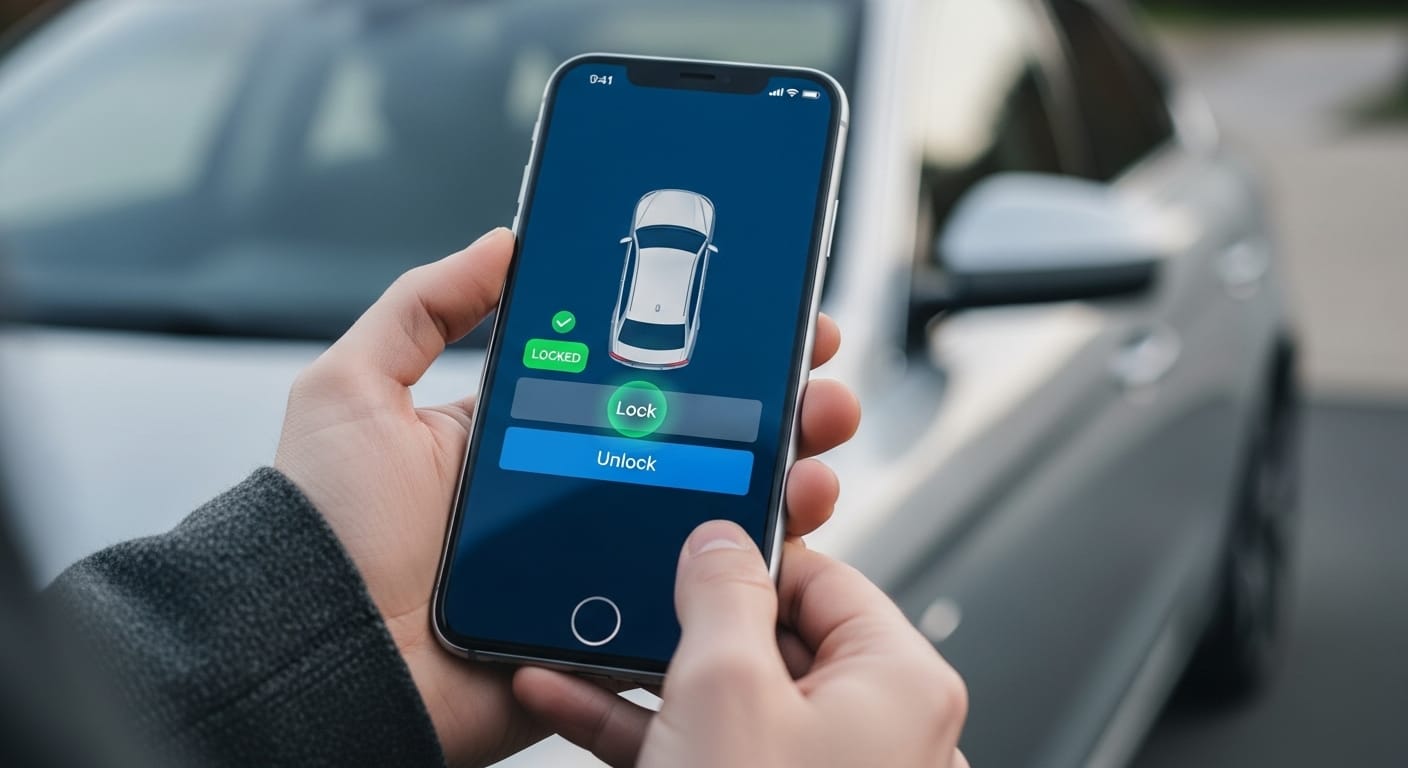
- Remote lock and unlock through a mobile app
- Vehicle health reports and maintenance alerts
- Over-the-air software updates
- Emergency assistance features
- EV charging support for electric models
- Strong privacy settings and account controls
The Future of Connected Cars
Connected cars in 2026 are only part of a larger shift toward smarter transportation. In the coming years, vehicles may communicate more closely with roads, cities, charging networks, and other vehicles. This could improve traffic flow, reduce delays, and support safer travel.
SAE International also tracks V2X development and consumer adoption, showing how connected vehicle systems continue to grow beyond individual car features. Explore SAE’s V2X resource.
Final Thoughts
Connected cars in 2026 show how quickly the automotive industry is changing. These vehicles can communicate with apps, roads, traffic systems, service centers, and sometimes other vehicles. They help drivers manage navigation, maintenance, safety alerts, entertainment, and vehicle settings with greater ease.
The main value of connected car technology is not just convenience. It is the way these systems bring information to the driver at the right time. Whether it is a traffic alert, maintenance warning, charging update, or route change, connected cars make driving more informed.