The Rise of In-Car Voice Assistants
In-car voice assistants are quickly becoming one of the most important innovations in modern vehicles. These intelligent systems are no longer just a convenience feature—they’re transforming the way we interact with our cars, making driving safer, more enjoyable, and more connected than ever before. As the automotive industry continues to evolve, the integration of artificial intelligence (AI) and machine learning into in-car systems is revolutionizing the driving experience in ways we could never have imagined just a decade ago. Autobest offers valuable insights into the latest automotive innovations like AI technology and in-car assistants.
What are In-Car Voice Assistants?
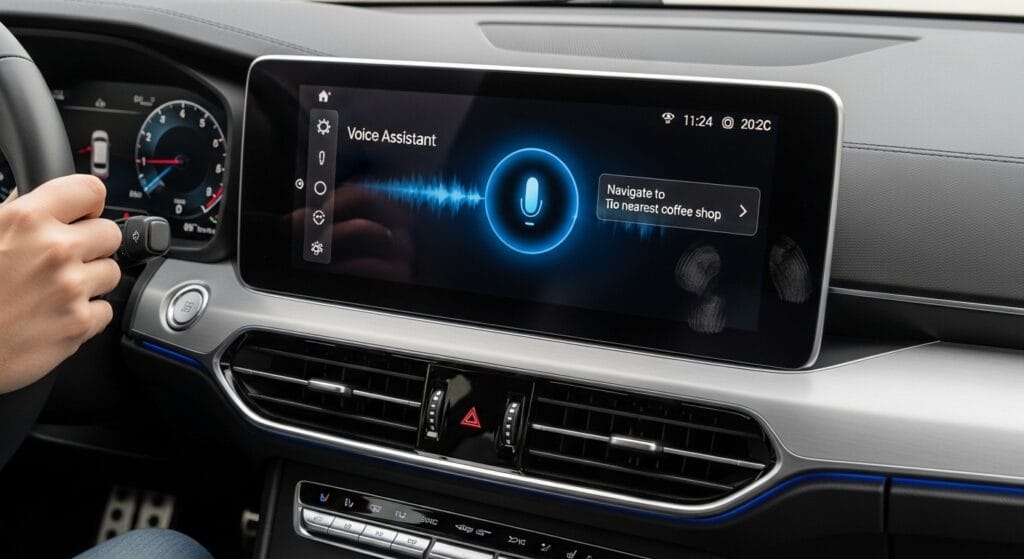
 In-car voice assistants are AI-powered systems that allow drivers and passengers to control various car functions using only their voice. These systems can manage everything from navigation and entertainment to climate control and vehicle settings, all without taking your hands off the wheel or eyes off the road. Voice assistants, like Apple’s Siri, Google Assistant, and Amazon’s Alexa, are now integrated into cars, providing users with an intuitive interface that feels natural and easy to use. As AI technology continues to evolve, Autobest explores the next steps in the world of in-car AI copilots.
Key Features of In-Car Voice Assistants
- Voice-Activated Navigation: Easily set destinations or request rerouting with simple voice commands, ensuring minimal distraction while driving.
- Entertainment Controls: Play music, podcasts, or radio stations, and even adjust the volume, all with your voice. No need to manually search for songs or adjust settings.
- Climate Control: Set the car’s temperature or adjust the heating and air conditioning using natural language commands. For instance, “Set temperature to 72 degrees” is all it takes.
- Vehicle Information: Ask for real-time information about fuel levels, tire pressure, or battery status without needing to look at the dashboard. Simply ask, and your voice assistant will provide the details.
How In-Car Voice Assistants Enhance Convenience
One of the biggest advantages of in-car voice assistants is the level of convenience they bring to the driving experience. In today’s fast-paced world, time is precious, and any feature that can make your driving experience more efficient is invaluable. Here’s how voice assistants make life easier:
- Hands-Free Operation: With in-car voice assistants, you can control your car’s features without needing to touch any buttons or dials. Whether it’s adjusting your music or finding the quickest route to your destination, voice commands are quick and intuitive.
- Navigation and Route Planning: In-car voice assistants make navigation easier than ever. You no longer need to manually input addresses into your GPS system. Simply say the address or the name of a business, and the assistant will take care of the rest. You can also explore more maintenance tips for safe driving while on the road.
- Personalized Experience: These systems can learn your preferences over time, such as your favorite music or preferred driving routes, and adjust settings automatically to match your needs.
Improving Driver Safety with Voice Assistants
Driver safety is one of the most important considerations when designing modern cars, and in-car voice assistants play a crucial role in enhancing safety on the road. By reducing the need for manual control of in-car systems, voice assistants allow drivers to keep their focus on the road. This has significant implications for reducing distractions and improving overall safety. Autobest offers great articles on how in-car AI technology is making roads safer.
Here’s how in-car voice assistants are improving safety:
- Reduced Distractions: Traditional in-car systems often require drivers to look down at their dashboard or take their hands off the wheel. With voice assistants, you can adjust settings and access information with simple commands, allowing you to maintain full attention on the road.
- Real-Time Alerts: In-car voice assistants can notify drivers about important issues such as low tire pressure, upcoming service appointments, or a check engine light. These timely alerts can help drivers make informed decisions, preventing potential issues on the road.
- Driving Mode Integration: Many voice assistants are now integrated with advanced driver-assistance systems (ADAS), including lane departure warnings, collision alerts, and adaptive cruise control. These systems work together to create a more seamless, safe driving experience.
How In-Car Voice Assistants Enhance Entertainment and Comfort
 In addition to improving convenience and safety, in-car voice assistants are also making entertainment and comfort more accessible for drivers and passengers. Whether it’s controlling the car’s infotainment system or adjusting the climate, voice assistants add a layer of sophistication to the driving experience. For those who love seamless integration, Autobest has some great resources on the latest voice assistant technology in cars.
- In-Car Entertainment: Voice assistants allow users to easily control their music and entertainment. From playing their favorite playlist to controlling the radio or even setting the mood with ambient lighting, voice assistants enhance the in-car experience.
- Smart Home Integration: As voice assistants become more integrated with smart home systems, drivers can now control smart devices at home while on the road. Imagine turning on your home lights or adjusting your thermostat with a simple voice command while driving.
- Seamless Streaming: Voice assistants in cars support streaming services like Spotify, Pandora, and Apple Music, allowing passengers to enjoy music or podcasts without manually navigating through their devices.
The Future of In-Car Voice Assistants: What to Expect
The future of in-car voice assistants is incredibly exciting. As AI technology continues to evolve, these systems are expected to become even more intelligent and capable of handling more complex tasks. In the near future, we might see voice assistants that can:
- Understand Complex Commands: The ability to process and respond to complex, multi-step voice commands will become increasingly refined. For example, you might be able to say, “Play my workout playlist, turn on the AC, and show me the fastest route to the gym,” and the assistant will carry out all of these actions simultaneously.
- Advanced Personalization: Voice assistants could begin offering personalized advice based on driving behavior, such as suggesting the best route based on your driving history or providing real-time alerts about potential traffic hazards ahead.
- Autonomous Driving Integration: Voice assistants could become integrated with fully autonomous driving systems, allowing you to communicate with the car as it drives itself. You could say, “Take me home,” and the vehicle would navigate itself, adjusting speed and making decisions based on traffic and road conditions.
Challenges and Considerations
Despite their many benefits, in-car voice assistants still face several challenges. For instance, noise interference from road sounds, passengers, and in-car systems can impact the accuracy of voice recognition. Manufacturers are working to improve microphone technology to reduce these interferences and enhance voice recognition even in noisy environments.
Additionally, data privacy concerns remain a hot topic. As these systems collect and process a wide range of personal data, including your location, preferences, and communication history, consumers are becoming more cautious about sharing sensitive information. Car manufacturers and tech companies will need to ensure robust security measures to protect user data and provide transparency about data usage.
Conclusion
In-car voice assistants are revolutionizing the way we interact with our vehicles, enhancing safety, convenience, entertainment, and overall driving experience. As technology continues to evolve, these assistants will become even smarter, more intuitive, and more integrated with other advanced automotive technologies. While challenges such as noise interference and data privacy need to be addressed, the future of in-car voice assistants is undoubtedly bright. By embracing these innovations, drivers will enjoy a safer, more connected, and more enjoyable ride.